
Summary:
Artificial Intelligence (AI), Machine Learning (ML), and Deep Learning (DL) are related but distinct concepts that fit inside one another. AI is the broad overarching goal of creating machines that can simulate human intelligence. Machine Learning is a subset of AI that uses algorithms to teach computers to learn from data without strict human programming. Deep Learning is a specialized subset of Machine Learning that uses complex, multi-layered artificial neural networks (inspired by the human brain) to automatically process massive amounts of unstructured data like images and voice. Simply put: AI is the goal, ML is the method, and DL is the advanced technique.
AI vs Machine Learning vs Deep Learning: What’s the Difference?
You cannot browse the internet or read the news today without seeing headlines about artificial intelligence. But as you read these articles, you probably notice a few other terms thrown into the mix: machine learning and deep learning. People often use these phrases as if they mean the exact same thing, but they do not.
If you want to build a career in technology, or if you simply want to understand how the modern world works, you need to understand the difference between AI, ML, and deep learning. The good news is that you do not need a computer science degree to understand them.
In this guide, we are going to break down the relationship between AI, ML, and DL in simple, plain English. We will explore how they connect, what makes them different, and look at practical examples of how they power the apps you use every day.
The Broad Concept: Artificial Intelligence (AI)
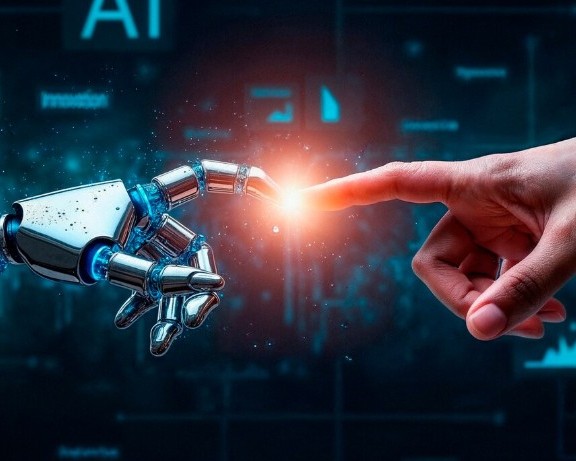
To understand what is the difference between AI and ML, you first need to look at the big picture. Think of Artificial Intelligence (AI) as a massive umbrella. Everything else we are going to talk about sits neatly underneath this umbrella.
AI is the broad field of computer science dedicated to creating systems that can mimic human intelligence. The ultimate goal of AI is to build machines capable of reasoning, problem-solving, planning, and understanding language just like a human would.
AI does not refer to one specific technology; it is simply the goal. For decades, early AI systems were “rule-based”. This meant a human programmer had to manually write thousands of strict rules for the computer to follow. If you wanted an AI to play chess, you had to program exactly what move to make in every possible scenario. It was intelligent, but it could not learn anything new on its own.
The Method: Machine Learning (ML)
Under the large umbrella of AI sits Machine Learning (ML). Machine learning is a specific subset of AI.
Instead of writing thousands of strict rules for a computer to follow, computer scientists asked a new question: what if we gave the computer a lot of data and let it figure out the rules itself?
That is exactly what machine learning does. It uses mathematical algorithms to analyze data, find patterns, and make predictions or decisions based on what it has learned.
For example, let us say you want to build a spam filter for emails. In traditional programming, you would tell the computer to block emails containing words like “free money.” But spammers quickly change their words. With machine learning, you feed the system a million examples of normal emails and a million examples of spam. The machine learning algorithm analyzes the data, finds its own patterns, and learns to identify spam automatically.
The core difference between AI and machine learning is that AI is the main goal (a smart machine), while machine learning is the method we use today to make that machine smart by feeding it data.
The Brain: Deep Learning (DL)
Now we go one layer deeper. Deep learning is a specialized, advanced subset of machine learning. If machine learning sits under the AI umbrella, deep learning sits right inside the machine learning bubble.
Deep learning was created to handle incredibly complex problems that standard machine learning struggles with. To do this, deep learning models use structures called “Artificial Neural Networks”. These networks are loosely inspired by the way the human brain connects neurons.
A deep learning network consists of multiple layers of these artificial nodes (which is why it is called “deep”). When data enters the system, it passes through these layers. Each layer breaks down a different piece of the information. Because of this complex structure, deep learning can automatically pull patterns out of messy, unstructured data like images, audio recordings, or massive blocks of text without needing a human to organize the data first.
However, there is a catch. Deep learning requires a massive amount of computational power and millions of data points to work properly. If you don’t have enough data, standard machine learning is usually a better choice.
AI vs Machine Learning Examples in the Real World
Sometimes the best way to understand these concepts is to see them in action. Let’s look at some practical AI vs machine learning examples that you probably interact with every day.
1. Smart Thermostats (Traditional AI)
Imagine a standard smart home thermostat. You can program it to turn off the heat at 9:00 AM and turn it back on at 5:00 PM. The system is simulating human control based on set logic rules. This is a basic form of AI.
2. Streaming Recommendations (Machine Learning)
When you log into a streaming service, the app suggests movies you will love. This is machine learning. The system analyzes your past viewing history (data) and compares it to millions of other users with similar tastes to predict what you will want to watch next. It learned this purely from user data, not because a programmer told it to recommend a specific movie.
3. Voice Assistants and Self-Driving Cars (Deep Learning)
When you speak to a voice assistant on your phone, the device has to understand your accent, the context of your words, and the background noise. This requires processing messy, unstructured audio data instantly. Deep learning neural networks are what make this voice recognition possible. Similarly, self-driving cars use deep learning to process video feeds from multiple cameras in real-time, allowing them to instantly distinguish between a pedestrian and a stop sign on the road.
Why This Matters for Your Career (And the Data Proving It)

Understanding the difference between AI, ML, and deep learning is a critical skill for the modern workforce. Businesses across the globe are adopting these technologies to increase efficiency, and they are desperate for professionals who understand how to use them.
The data highlights how fast this transition is happening. According to recent statistics from Forbes Advisor, the global AI market size is expected to reach a staggering $407 billion by 2027. Furthermore, data from IBM reveals that over 42% of enterprise-scale companies are actively using AI in their business today, with another 40% exploring how to implement it. Whether you are analyzing data, managing software teams, or marketing a product, knowing how these tools work gives you a significant edge over the competition.
If you are ready to stop just reading about AI and start actively using it to boost your career, it is time to take the next step. Our comprehensive AI course is designed for beginners. We strip away the confusing jargon and teach you how to apply AI tools to solve real business problems, helping you become highly valuable to top employers.
Furthermore, AI is completely transforming how businesses reach their customers online. If you want to learn how to combine modern machine learning tools with high-impact marketing campaigns, be sure to check out our Digital Marketing course.
Have questions about which educational path is right for your career goals? Visit our Contact us page, and our team of experts will be happy to help you map out your future in tech.
FAQ's
AI is the broad concept of creating machines that can simulate human intelligence. Machine Learning (ML) is a specific method used to achieve AI. Instead of programming exact rules, ML allows a computer to learn from data and improve its own performance over time.
Yes. Early AI systems did not use machine learning. They were "rule-based" systems where human programmers manually typed in thousands of "if-then" rules to tell the computer exactly how to behave in different scenarios. However, almost all modern AI relies on machine learning today.
Deep learning is not always "better," but it is more powerful for specific tasks. While regular machine learning is great for analyzing structured data (like spreadsheets), deep learning excels at understanding complex, unstructured data like human speech, natural text, and video footage.
If you want to become an AI engineer who builds new algorithms from scratch, you will need strong math skills. However, if you simply want to use AI tools, manage AI projects, or apply AI to marketing, you do not need advanced math. You just need to understand how the tools work and how to guide them.
ChatGPT is a product built using AI. More specifically, it is built using Deep Learning and a technology called Large Language Models (LLMs). So, while ChatGPT is a form of artificial intelligence, AI is a much larger field that includes many other technologies besides chatbots.